7 Digital Marketing Mistakes Nigerian Businesses Make And How to Fix Them
Nigeria has over 109 million internet users, representing one of the largest online audiences on the African continent. The opportunity for Nigerian businesses to attract customers, build credibility, and grow revenue through digital marketing has never been bigger. Yet the majority of Nigerian businesses investing in digital marketing are not getting the results they expect, not because digital marketing doesn’t work, but because the same costly mistakes are being repeated across businesses, industries, and cities.
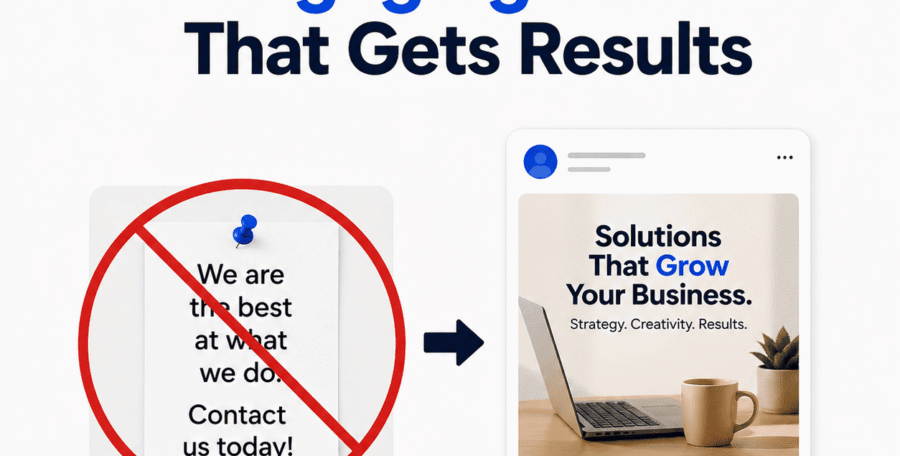
As Gbemisola Lawal, a digital marketing strategist quoted in Vanguard, put it: “One of the biggest mistakes I see is treating social media as a notice board. A business posts, ‘We are open,’ ‘Our product is available,’ or ‘Buy from us,’ and then wonders why people are not engaging.” This article covers the seven most costly digital marketing mistakes Nigerian businesses make and the specific fix for each one.
Mistake 1: Treating Social Media as a Notice Board
This is the most widespread digital marketing mistake across Nigerian businesses of every size. A page full of product photos, price lists, and “DM to order” captions is not a digital marketing strategy; it is a catalogue. And nobody follows a catalogue.
Social media platforms reward content that sparks conversation, builds community, and provides genuine value. Businesses that post exclusively about their products and promotions consistently underperform compared to those that mix educational content, behind-the-scenes storytelling, customer features, and opinion-led posts that invite responses.
The fix: Apply the 80/20 rule: 80% of your content should educate, entertain, or engage your audience genuinely; 20% can be directly promotional. Content that serves the audience first consistently builds the trust that makes promotional content convert.
Mistake 2: Spreading a Small Budget Across Too Many Platforms
Many Nigerian businesses try to maintain a presence on Instagram, Facebook, TikTok, LinkedIn, Twitter/X, and YouTube simultaneously with a monthly ad budget of ₦50,000 to ₦150,000. The result is that no platform receives enough investment to gather meaningful data, build an audience, or produce results, while the business owner exhausts themselves managing five underperforming channels.
Spreading a small budget across multiple platforms means none of them receive enough funding to be optimised. Ad platforms like Facebook and Google need a minimum spend and learning period to find the audience most likely to convert; a budget split five ways denies each platform the data it needs.
The fix: Choose one or two platforms where your specific audience is most active and invest there fully. Once one channel is consistently producing results, the approach can be replicated on a second. A concentrated ₦150,000 monthly spend on one channel consistently outperforms ₦30,000 across five.
Mistake 3: Running Campaigns With No Clear Single Objective
A very common pattern in Nigerian digital marketing: one ad campaign aimed at simultaneously building brand awareness, generating website traffic, collecting leads, and producing direct sales. The problem is that each of these goals requires a different ad format, creative approach, targeting strategy, and success metric. Combining them into one campaign produces a result that is mediocre at all four.
The fix: Each campaign should have exactly one objective. An awareness campaign is evaluated on reach and video views. A lead generation campaign is evaluated on cost per lead. A sales campaign is evaluated on cost per purchase. Define the objective before designing the creative, and resist adding secondary goals once the campaign is live.
Mistake 4: Using Generic Creatives That Don’t Resonate Locally
Nigeria is a diverse market. What resonates with a 28-year-old professional in Lekki is not the same as what resonates with a business owner in Onitsha or a student in Zaria. Yet many Nigerian businesses use international stock photos, generic Western-style ad copy, and one-size-fits-all messaging across every audience segment.
Generic creatives get ignored. Nigerian consumers have developed a sophisticated ability to scroll past content that does not feel specifically relevant to their context, culture, or concerns. As one Lagos-based agency put it: “Nigeria is diverse. What resonates with an audience in Lagos might differ from Abuja or Port Harcourt. Generic creatives get ignored.”
The fix: Use real photos of real Nigerian people, places, and products wherever possible. Write ad copy that speaks in the natural language of your specific target customer not translated Western marketing speak. The most effective Nigerian ads feel like they were written by someone who actually understands the customer’s daily reality.
Mistake 5: Ignoring Customer Retention Entirely
Nigerian businesses spend heavily on acquiring new customers and almost nothing on keeping the ones they already have. This is expensive in two ways: acquiring a new customer consistently costs more than retaining an existing one, and a business that loses customers as fast as it gains them never actually grows; it runs on a treadmill.
A 5% increase in customer retention rates can boost profits by 25 to 95%, according to widely cited research across industries. Yet most Nigerian digital marketing budgets allocate nothing to email marketing, WhatsApp follow-up, loyalty programmes, or any other mechanism for turning a first-time buyer into a repeat customer.
The fix: After every purchase or engagement, have a deliberate follow-up process. A WhatsApp message checking in on the customer’s experience, an email with a relevant offer for returning customers, or a simple loyalty incentive for repeat purchases all keep existing customers engaged at a fraction of the cost of acquiring new ones. See our full guide on Email Marketing in Nigeria: How to Build a List That Actually Buys.
Mistake 6: Copying Western Marketing Strategies Without Adapting Them
This mistake shows up most frequently in paid advertising and content strategy. A Nigerian business finds a marketing approach that works for an American or British brand a specific ad format, a content framework, a pricing strategy and applies it directly to the Nigerian market without considering how differently Nigerian consumers think and buy.
Nigerian consumers have accumulated justified scepticism from repeated negative online experiences. They are more trust-dependent and relationship-oriented in their buying decisions than many Western marketing frameworks assume. What works as a direct-response ad in the US often falls flat in Nigeria because it skips the trust-building step that Nigerian buyers need before they commit.
The fix: Start by understanding how your specific Nigerian customer actually makes decisions. Research shows Nigerian buyers typically need more social proof, more personal communication, and more evidence that the business is legitimate before they will transact. Build these into every campaign rather than assuming a foreign framework will translate directly.
Mistake 7: Abandoning Strategies Before They Have Time to Work
Perhaps the most self-defeating digital marketing mistake Nigerian businesses make is giving up on strategies that were working, just not quickly enough. SEO is abandoned after three months because rankings haven’t moved dramatically. Content marketing is dropped after six weeks because blog traffic is low. Social media is declared “useless” after a month of inconsistent posting.
Digital marketing channels are not vending machines; you do not put money or effort in and immediately receive results out. SEO, content marketing, and organic social media are compounding investments. The returns build slowly at first, then accelerate significantly once momentum is established. Businesses that abandon these channels before the compounding effect begins consistently restart from zero rather than building on accumulated progress.
The fix: Commit to a minimum timeline before evaluating any digital marketing channel: six months for SEO and content, three months for social media, six to eight weeks for paid advertising. Track leading indicators (ranking improvements, engagement rates, email list growth) during that period rather than expecting immediate revenue results. Adjust tactics if needed, but stay in the channel long enough to reach the point where progress compounds.
The Common Thread
Every mistake on this list shares the same underlying cause: confusing activity with strategy. Posting daily is activity. Having a clear plan for how a Nigerian consumer moves from discovering your business to becoming a loyal customer is strategy. Nigerian businesses that succeed at digital marketing in 2026 are not the ones doing the most; they are the ones doing the right things consistently, measuring real outcomes, and adjusting based on data rather than feeling.
How Firstwealth Tech Can Help
At Firstwealth Tech, we help Nigerian businesses build digital marketing strategies that avoid these mistakes from the start or diagnose and fix them when they’ve already taken root. Whether you need a complete strategy review or help with a specific channel, explore our Digital Marketing in Nigeria: The Ultimate 2026 Guide, our Digital Agency Services, or book a free consultation.
FAQs
The most common mistakes include treating social media as a notice board, spreading a small budget across too many platforms, running campaigns with no single clear objective, using generic non-localised creatives, ignoring customer retention, copying Western strategies without adapting them, and abandoning strategies before they have time to produce results.
Most failures trace back to a lack of clear strategy rather than a failure of the channel itself. Businesses that post without a content plan, advertise without defined objectives, or invest in SEO for only a few weeks rarely see meaningful results regardless of how much they spend.
Results depend more on how a budget is concentrated than on its total size. A ₦150,000 monthly budget spent entirely on one well-chosen channel typically outperforms the same amount split across five platforms. Consistency and focus matter more than the total figure.
The most common causes are posting only promotional content rather than content that builds genuine engagement, targeting too broadly, using generic creatives that don't resonate with a specific Nigerian audience, and having no follow-up process for people who express interest but don't immediately buy.
Paid advertising typically shows early data within two to four weeks. SEO and content marketing take three to six months for meaningful results. Building a social media audience takes three to six months of consistent, high-quality posting. Abandoning any of these channels before these timelines have passed is the most common reason businesses conclude digital marketing "doesn't work."
For most Nigerian businesses with limited budgets and resources, focusing on one or two platforms where the target audience is most active yields significantly better results than maintaining a mediocre presence across many platforms. Excellence on two platforms outperforms mediocrity across five.
Nigerian consumers typically require more social proof, more personal communication, and more evidence of business legitimacy before transacting online. Trust is built more slowly and more relationship-dependently than in many Western markets. Marketing strategies that skip the trust-building phase, which many Western frameworks often do, underperform in the Nigerian context.
By concentrating existing spend on fewer channels, adding a customer retention process (follow-up messages, loyalty incentives), using real local photography instead of stock images, and committing to a longer timeline for organic strategies to compound. These changes require more time investment than financial investment.
This depends on the business's available time, marketing expertise, and growth stage. In-house management works when the owner or a dedicated team member can invest consistent, strategic effort. An agency is typically more effective when the business owner lacks the time or expertise to manage multiple channels while running the business.
Fix the measurement problem first: define what success actually means in measurable business terms (leads, sales, revenue) and start tracking it weekly. Every other mistake becomes easier to identify and fix once you can measure whether your marketing is actually producing results.